Tongue thrusting habit is a common oral issue that can change the way teeth grow and line up. Many people do not realize that this habit can lead to dental problems over time. In fact, tongue thrusting habit can affect teeth alignment, speech, and even swallowing. Because of this, it is important to understand how this habit develops and what you can do about it. Dental experts and organizations like the WHO and CDC highlight the need to address oral habits early for better dental health.
What Is Tongue Thrusting Habit?
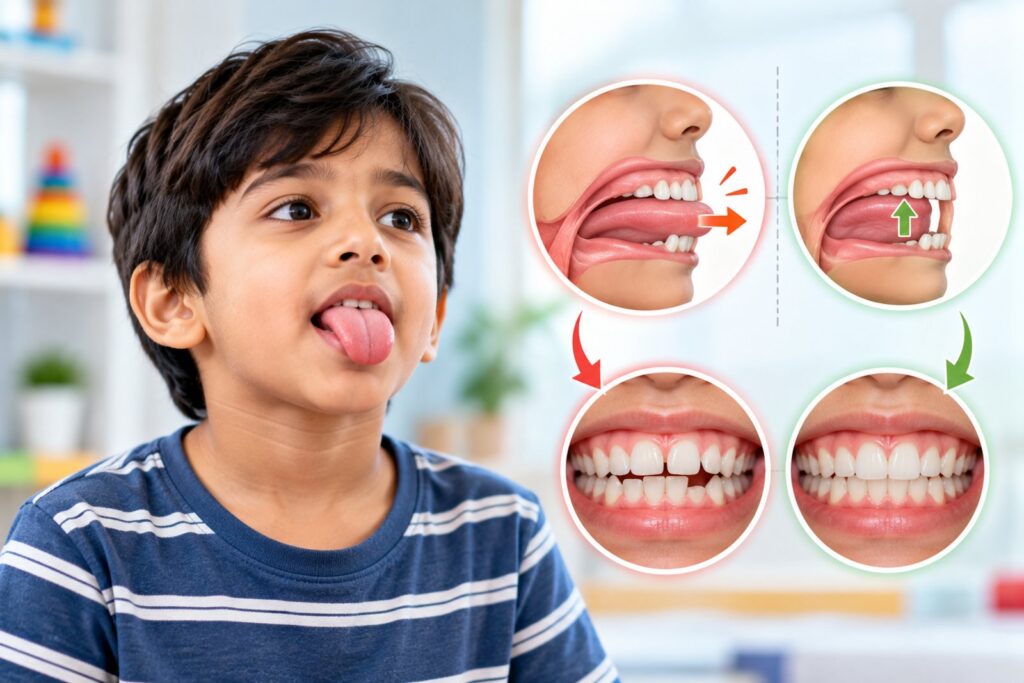
Simply put, tongue thrusting is when the tongue pushes against or between the teeth during swallowing, speaking, or even at rest. Usually, the tongue should press against the roof of the mouth. However, with tongue thrusting, it moves forward instead. As a result, this habit can change the way teeth grow and fit together. Often, children develop this habit, but adults can have it too. Over time, it may lead to changes in the bite and jaw shape.
Common Symptoms of Tongue Thrusting
Recognizing the signs of tongue thrusting is key for early help. For example, you may notice:
Sometimes, these symptoms are mild. However, they can become more obvious as the habit continues. Early signs may be easy to miss, so regular dental check-ups help catch problems sooner.
Causes and Risk Factors
There are several reasons why someone may develop a tongue thrusting habit. For instance, some common causes include:
Additionally, some children pick up this habit naturally and may outgrow it. However, if it continues past early childhood, it can affect dental alignment. According to dental journals, early intervention can reduce long-term effects.
How Tongue Thrusting Affects Teeth Alignment
Over time, tongue thrusting habit can change the way teeth line up. When the tongue presses against the teeth often, it can push them forward. As a result, this may cause:
Furthermore, the effects of tongue thrusting on teeth can make chewing and speaking harder. In some cases, it may even lead to jaw pain. Dentists often see these changes during routine exams. Early treatment can help prevent serious dental alignment problems.
Diagnosis of Tongue Thrusting Habit
Usually, dentists or orthodontists can spot tongue thrusting during a dental check-up. They may look for signs such as an open bite or speech issues. Sometimes, they will ask about habits like thumb sucking or mouth breathing. In some cases, a speech-language pathologist may help with the diagnosis. They watch how the tongue moves during swallowing and speaking. Early diagnosis is important because it can lead to better outcomes with treatment.
Treatment Options for Tongue Thrusting
Treating tongue thrusting habit often involves several steps. Depending on the cause and age of the person, treatment may include:
For many, a team approach works best. Dentists, orthodontists, and speech therapists may all help with correcting tongue thrusting. Early treatment can prevent long-term dental problems and improve oral habits and dental alignment.
Prevention and Lifestyle Tips
Although some children may develop tongue thrusting naturally, there are ways to lower the risk. For example, you can:
With these steps, you can help prevent the effects of tongue thrusting on teeth. Good oral habits and early care support healthy teeth alignment for life.
Conclusion
If you notice signs of tongue thrusting or changes in teeth alignment, Sowbhagya Dental is here to help. Schedule a consultation today to get expert advice and support for better oral health.